- 正在播放:欧洲的某个地方 - HD中字
- 提醒不要轻易相信影视中的广告,谨防上当受骗!
- 如果无法在线播放请重新刷新页面,或者切换线路。
- 视频加载速度跟网速有关,请耐心等待几秒钟。
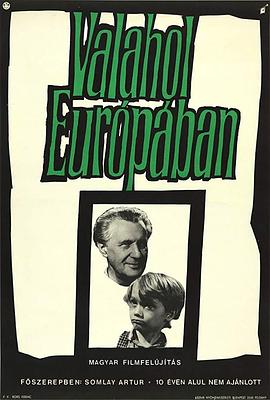
欧洲的某个地方 HD中字
1948 / 其它 / 电影
状态:HD中字
扫一扫 手机免费观看更方便
《欧洲的某个地方》 HD中字
欧洲的某个地方
点击量 | 日:416 | 周:764 | 月:955 | 总:507
年份:1948地区:其它类型:剧情
导演:Radványi,Géza
主演:Artúr,Somlay,Miklós,Gábor,Zsuzsa,Bánki
版本:1080P高清未删减完整版
更新时间:2025-10-22
Somewhere in the remote region, the war ends. In the midst of ruined cities and houses in the streets, in rural hamlets, everywhere where people still live, are children who have lost their homes and parents. Abandoned, hungry, and in rags, defenseless and humiliated, they wander through the world. Hunger drives them. Little streams of orphans merge into a river which rushes forward and submerges everything in its path. The children do not know any feeling; they know only the world of their enemies. They fight, steal, struggle for a mouthful of food, and violence is merely a means to get it. A gang led by Cahoun finds a refuge in an abandoned castle and encounters an old composer who has voluntarily retired into solitude from a world of hatred, treason, and crime. How can they find a common ground, how can they become mutual friends The castle becomes their hiding place but possibly it will also be their first home which they may organize and must defend. But even for this, the price will be very high.To this simple story, the journalist, writer, poet, scriptwriter, movie director, and film theoretician Béla Balázs applied many years of experience. He and the director Géza Radványi created a work which opened a new postwar chapter in Hungarian film. Surprisingly, this film has not lost any of its impact over the years, especially on a profound philosophical level. That is to say, it is not merely a movie about war; it is not important in what location and in what period of time it takes place. It is a story outside of time about the joyless fate of children who pay dearly for the cruel war games of adults.At the time it was premiered, the movie was enthusiastically received by the critics. The main roles were taken by streetwise boys of a children's group who created their roles improvisationally in close contact with a few professional actors, and in the children's acting their own fresh experience of war's turmoil appears to be reflected. At the same time, their performance fits admirably into the mosaic of a very complex movie language. Balázs's influence revealed itself, above all, in the introductory sequences an air raid on an amusement park, seen in a montage of dramatic situations evoking the last spasms of war, where, undoubtedly, we discern the influence of classical Soviet cinematography. Shooting, the boy's escape, the locomotive's wheels, the shadows of soldiers with submachine guns, the sound of a whistle—the images are linked together in abrupt sequences in which varying shots and expressive sharp sounds are emphasized. A perfectly planned screenplay avoided all elements of sentimentality, time-worn stereotypes of wronged children, romanticism and cheap simplification. The authors succeeded in bridging the perilous dramatic abyss of the metamorphosis of a children's community. Their telling of the story (the scene of pillaging, the assault on the castle, etc) independently introduced some neorealist elements which, at that time, were being propagated in Italy by De Sica, Rossellini, and other film artists. The rebukes of contemporary critics, who called attention to formalism for its own sake have been forgotten. The masterly art of cameraman Barnabás Hegyi gives vitality to the poetic images. His angle shots of the children, his composition of scenes in the castle interior, are a living document of the times, and underline the atmosphere and the characters of the protagonists. The success of the picture was also enhanced by the musical art of composer Dénes Buday who, in tense situations, inserted the theme of the Marseilaise into the movie's structure, as a motive of community unification, as an expression of friendship and the possibility of understanding.Valahol Europaban is the first significant postwar Hungarian film. It originated in a relaxed atmosphere, replete with joy and euphoria, and it includes these elements in order to demonstrate the strength of humanism, tolerance, and friendship. It represents a general condemnation of war anywhere in the world, in any form.
提示:[DVD:720P标准清晰版] [BD:高清完整版] [HD:1080P高清未删减版],BD和HD版本不太适合网速过慢的手机在线观看。
猜你喜欢
相关推荐
- 正片5.0
我叫夏津生,做水产生意,45岁那年我儿子跳楼自杀了,他死后第37天我进了他所有的群,我发现里面全都是有抑郁倾向企图轻生的孩子,我不知道为什么,我在
- 中文字幕3.0
过着平凡生活的一郎,某天在妻子的手机上发现了一条可疑信息。发件人是个男人,他怀疑是妻子的前男友,并威胁要公开一段私密视频。起初,一郎难以置信,但看
- 中文字幕5.0
继母担心独自在异国他乡工作的继子佑介,打电话给他。听到电话那头虚弱的声音,她心头一软,便前去探望。由于从小娇生惯养,她担心继子能否适应异国生活,来
- 正片3.0
三段由失去展开的意外旅程,笑泪交错梭织出小人物的生命情状:自家老屋被迫拆迁,一人一狗带着破烂家当上路流浪,怎知重启人生难得超乎想像;离世父亲留下酿
- 正片2.0
围绕家庭动态展开,探讨人物关系和面临的挑战。
- 正片3.0
这是一个关于路易斯安那州一位训犬师的生平及其成就的故事,讲述了他训练了约 30,000 只犬后在全球留下的印记。
- 第20集完结10.0
29岁的自由职业者生田博人,无固定工作、无恋人,连常人该有的未来焦虑也全然不觉,是个乐天自由派。仅凭善良人品,他从交好的邻居奶奶和田花惠手中继承一
- 正片9.0
因工作的关系,老实木讷的大学生诹访日向(大東俊介 饰)结识了端庄美丽的白崎顺子(松本若菜 饰)。经过一段时间交往,二人建立了恋爱关系,不过令他始料
- 正片5.0
漁港石澳海灘上有不少形似女人的石頭,叫作「情人石」,據說是日日夜夜在海邊盼望情人歸來的少女所化。漁港富戶林金水的女兒秋子(鄭佩佩)本與蘇大貴(黃宗
- 正片6.0
该片取材于1980年代一首著名的巴西民歌,讲述了大盗João的故事。João来到城市满怀希望开始新的生活,他的表兄给他提供了一份工作,条件是Joã
- 正片4.0
在幸福的时刻,他们背弃了彼此……在考验的时刻,他们又重归于好……
- 正片1.0
这部影片讲述了瑞典驻智利大使哈拉尔德·埃德尔斯坦在1973年9月11日军事政变期间及之后,为保护无辜民众免遭处决而做出的英勇事迹。我们将跟随埃德尔
- 正片10.0
17 岁的纳马·巴拉什 (Naama Barash) 喜欢喝酒、吸毒,和志同道合的朋友在一起。巴拉什的反叛行为其实 是为了从她父母的争吵中逃离,她
- 正片8.0
两个15岁的男孩在森林里秘密会面,却目睹了一场血腥屠杀。
- 正片2.0
费德曼医生的诊所是一个非同寻常的地方。这位由法国社会福利机构资助的精神科医生在这里接待外国病人和寻求庇护者。对他们中的一些人来说,医疗援助是留在法
- 正片5.0
1815年,在马赛的城墙之内,埃德蒙·唐泰斯因一项他未曾犯下的罪行而被囚禁在坚固的伊夫堡监狱中。经历了十四年的监禁,他最终精心策划了逃脱,并开始了
- 正片5.0
李、吴两姓为争水结下世仇,经常为水发生械斗。合作化以后,童养媳金凤(张瑞芳 饰)的命运随着上级工作人员王琦(李明 饰)的到来发生了变化。在一次王琦
影视评论
神马电影网免费提供热播电视剧大全、综艺、动漫、无删减高清电影在线看
Copyright © 2025 nbhengfa.com All Rights Reserved
浙ICP备2025063725号-1
耶~~复制成功